The Shield of the Nations: A 3,000-Year History of Israel’s Global Protectors
- Introduction: The Pattern of the Patron
Throughout its three-millennium history, the survival of a Jewish state in the Levant has rarely been a solitary endeavor. Instead, it has frequently relied on the concept of an external protector—a global or imperial power that provides the diplomatic, military, or financial “shield” necessary for national continuity. For the Senior Geopolitical Historian, these relationships are not mere accidents of diplomacy; they are a Strategic Joint Venture and a Bipolar Economic System where protection is exchanged for unique strategic dividends.
While the protector assumes certain geopolitical risks, it gains access to an “existential innovation” hub that provides high-velocity R&D and combat-proven defense systems. This “Net Strategic Balance Sheet” reveals that the alliance is rarely one-sided patronage, but rather a sophisticated industrial partnership.
The Dual-Level Economic Equation
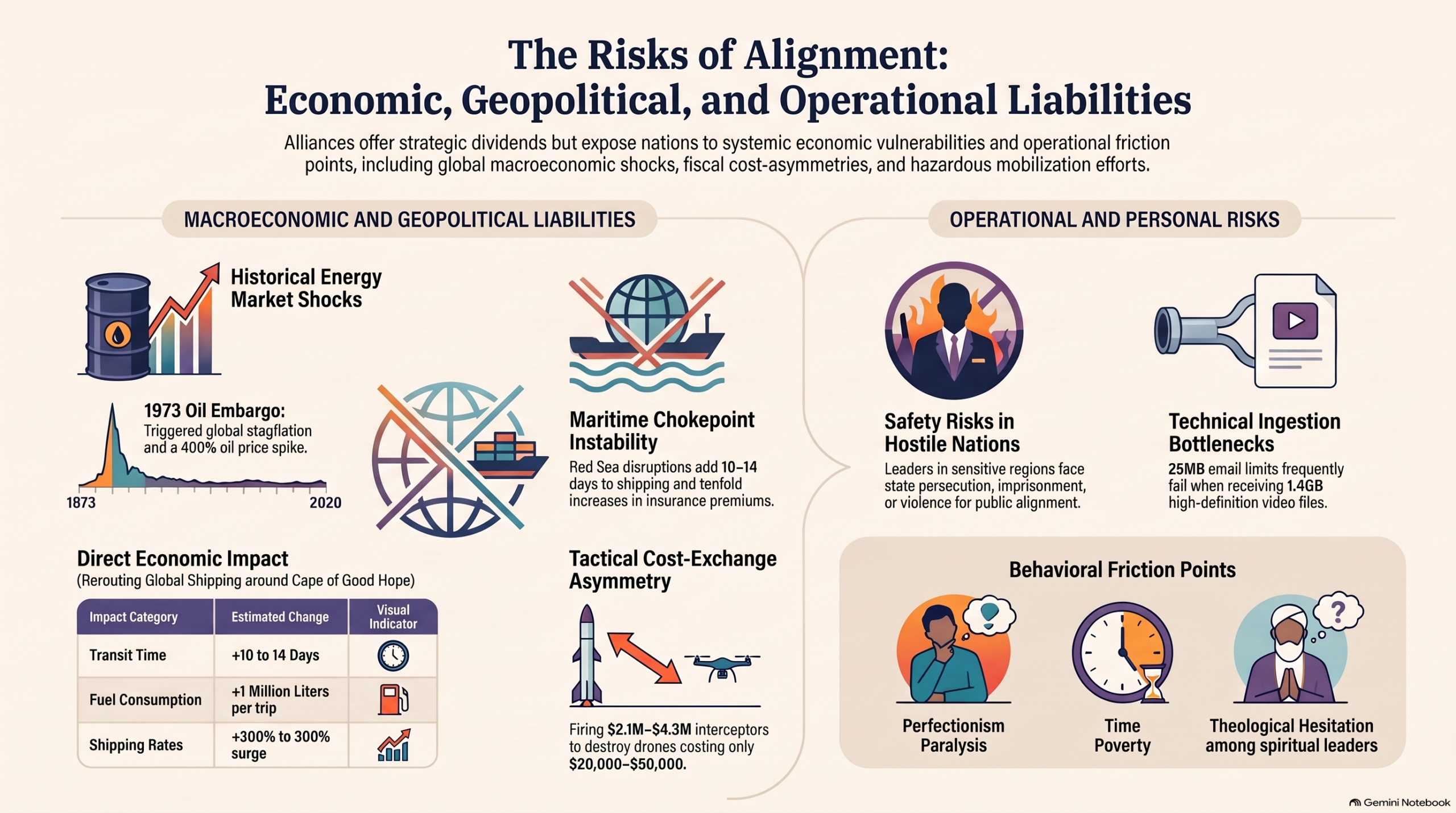
- Macro-vulnerabilities (Liabilities): Protection exposes patrons to systemic risks, including regional oil shocks (e.g., the 1973 S&P 500 loss of 40% value), maritime shipping disruptions (e.g., the 10–14 day delays in the Red Sea), and the tactical Asymmetric Cost-Exchange (expending 2.1M–4.3M SM-2 interceptors to neutralize $20k drones).
- Micro-industrial Assets (Dividends): Conversely, patrons tap into a high-pressure innovation cycle that offers TRL 1–9 Compression (accelerating Technology Readiness Levels), providing the protector with combat-proven hardware and foundational intellectual property.
This ancient pattern of imperial sponsorship began not in the modern era, but in the halls of the Achaemenid Persian Empire over 2,500 years ago.
- The Persian Restoration: Cyrus the Great and the Edict (c. 539 BCE)
The Achaemenid Persian Empire serves as history’s first major benefactor for the Jewish people. Following the Babylonian exile, the Persian conquest of Babylon in 539 BCE marked a turning point where imperial strategy intersected with religious tolerance to facilitate national continuity.
The Persian Blueprint for Restoration:
- The Edict of Cyrus: An imperial decree of religious tolerance recorded on the Cyrus Cylinder, permitting Jewish exiles to return to the province of Yehud Medinata.
- Imperial Funding: Successive monarchs, including Darius I and Artaxerxes I, provided direct subsidies and resources from the imperial treasury for the reconstruction of the Second Temple.
- Physical Security: The Persian crown provided the legal authority and military protection necessary to safeguard the returning community from hostile regional governors and local factions.
This ancient precedent of an external empire providing a legal and financial framework for restoration set the stage for modern diplomatic instruments, most notably the British Mandate.
- The Modern Foundation: British Law and the Czech Pivot (1917–1949)
The restoration of Israel in the modern era was forged through a transition between two distinct types of protectors: the foundational diplomatic shield of the United Kingdom and the emergency military support of the Soviet-aligned Czechs. While Britain provided the legal “right” to exist, the USSR (via Czechoslovakia) provided the “means” to survive the 1948 War of Independence, viewing Israel as a strategic wedge to displace British influence.
Comparison of Foundational Protectors
Power Type of Support Critical Action Primary Motivation
United Kingdom Legal & Diplomatic Balfour Declaration (1917): Established the “national home” framework. Geopolitical influence and WWI strategic alignment.
Czechoslovakia Military (Emergency) Operation Balak: Airlift of rifles, ammunition, and S-199 fighters. Soviet-directed strategy to displace British regional power.
This alignment with the Soviet bloc ended by the early 1950s, forcing the young state to look toward a European power with a shared enemy in North Africa.
- The French Connection: Atoms and Air Superiority (1953–1967)
In the 1950s, Israel entered the “Mirage Era,” where France served as its primary military and nuclear backer. This alliance was driven by a common adversary: Gamal Abdel Nasser’s Egypt, which was fueling the Algerian conflict against French rule.
Key Technological Legacies of the French Shield:
- Conventional Dominance: The supply of Mirage III jet fighters and AMX-13 tanks secured Israeli air superiority and armored mobility through the 1967 Six-Day War.
- The Strategic Deterrent: France was the architect of Israel’s long-term deterrent, providing the heavy water, construction expertise, and technology for the nuclear reactor at Dimona.
This era was abruptly terminated by Charles de Gaulle in 1967, necessitating a decisive pivot toward the United States.
- The American Strategic Alliance: Qualitative Edge and Economic Synergy (1967–Present)
The relationship with the United States has evolved into an institutionalized industrial partnership anchored by the Qualitative Military Edge (QME)—a legal mandate ensuring Israel maintains technological superiority over regional adversaries.
The Four Pillars of the US Shield:
- Emergency Airlifts: Exemplified by Operation Nickel Grass (1973), which replenished the IDF during the Yom Kippur War.
- Financial Aid (FMF): Sustained 10-year Memorandums of Understanding (MOUs) providing $3.8 billion annually.
- Joint Missile Defense: Massive co-investment in layered shields (Iron Dome, David’s Sling, Arrow).
- Diplomatic Veto: Consistent use of the UN Security Council veto to block sanctions.
The Economic Dividend Loop Modern U.S. protection functions as a domestic industrial stimulus through a recycling mechanism.
- 100% Recycling & OSP Phase-Out: Under the current MOU, the Off-Shore Procurement (OSP)—which allowed Israel to spend aid locally—is being phased out by 2028. Consequently, 100% of FMF must be spent with U.S. firms.
- Industrial Beneficiaries: This funding flows directly to American companies in states like Texas (Lockheed Martin), Missouri (Boeing), Arizona (RTX), and Pennsylvania (General Dynamics), supporting tens of thousands of high-skilled manufacturing jobs.
- The Innovation Shield: Semiconductors and Joint Defense
In the 21st century, protecting Israel serves to protect Western high-tech supply chains and provides a “Combat Feedback Loop” that lowers R&D costs for the Pentagon.
The Dividends of Protection
Sector Israeli Tech/Action Benefit to the Protector (US/Europe)
Semiconductors Intel Haifa/Kiryat Gat Design of Core/Centrino processors; vital non-East Asian fab capacity.
AI Networking NVIDIA (Mellanox) InfiniBand architecture; the “nervous system” of modern AI data centers.
Missile Defense Arrow 3 System €3.5B sale to Germany; provides NATO with a combat-proven hypersonic shield.
Vehicle Survivability Trophy APS Integrated onto M1A2 Abrams; protects billions in US armored capital.
Cybersecurity Check Point / Wiz Mitigation of billions in losses from ransomware and IP theft.
The Operational Dividend: Through the “Combat Feedback Loop,” Israel provides the U.S. with critical telemetry and software architecture updates for platforms like the F-35. This facilitates TRL 1–9 Compression, allowing Western militaries to leapfrog early-stage exploratory research and acquire proven technology at a fraction of independent development costs.
- The Emerging Multilateral Frontier (2020–Present)
The current era is defined by a shift toward a regional and multilateral defensive architecture designed to counter asymmetric anti-access/area-denial (A2/AD) threats.
- The Abraham Accords (2020): A historic reversal of the Arab League Boycott, enabling regional trade and security integration.
- Active Defense Precedents (April & October 2024): A new paradigm in international statecraft where the US, UK, and France—coordinated through CENTCOM—worked alongside regional Arab partners like Jordan and Saudi Arabia. These partners provided vital radar tracking and intelligence sharing, with Jordan directly intercepting threats, to neutralize large-scale Iranian aerial attacks.
- Conclusion: The Imperial Interest Constant
Over 3,000 years, Israel’s survival has consistently intersected with the strategic interests of global powers. What began as imperial patronage from Cyrus the Great has evolved into a high-tech Strategic Joint Venture with the modern West.
Learner’s Reflection: Three Key Insights
- From Patronage to Joint Venture: Support for Israel has transitioned into a Bipolar Economic System where patrons receive significant technological, industrial, and “operational cost avoidance” returns.
- Multilateral Integration: The era of the “sole protector” is evolving into a regional security matrix, integrating former adversaries through CENTCOM coordination.
- The Innovation Hub: By protecting this high-pressure incubator, global powers gain access to combat-proven solutions, from missile defense to AI networking, that drive Western economic competitiveness.
The “Shield of the Nations” remains a dynamic, evolving historical pattern where the security of the Levant is inextricably linked to the industrial and strategic health of the world’s leading powers.


