
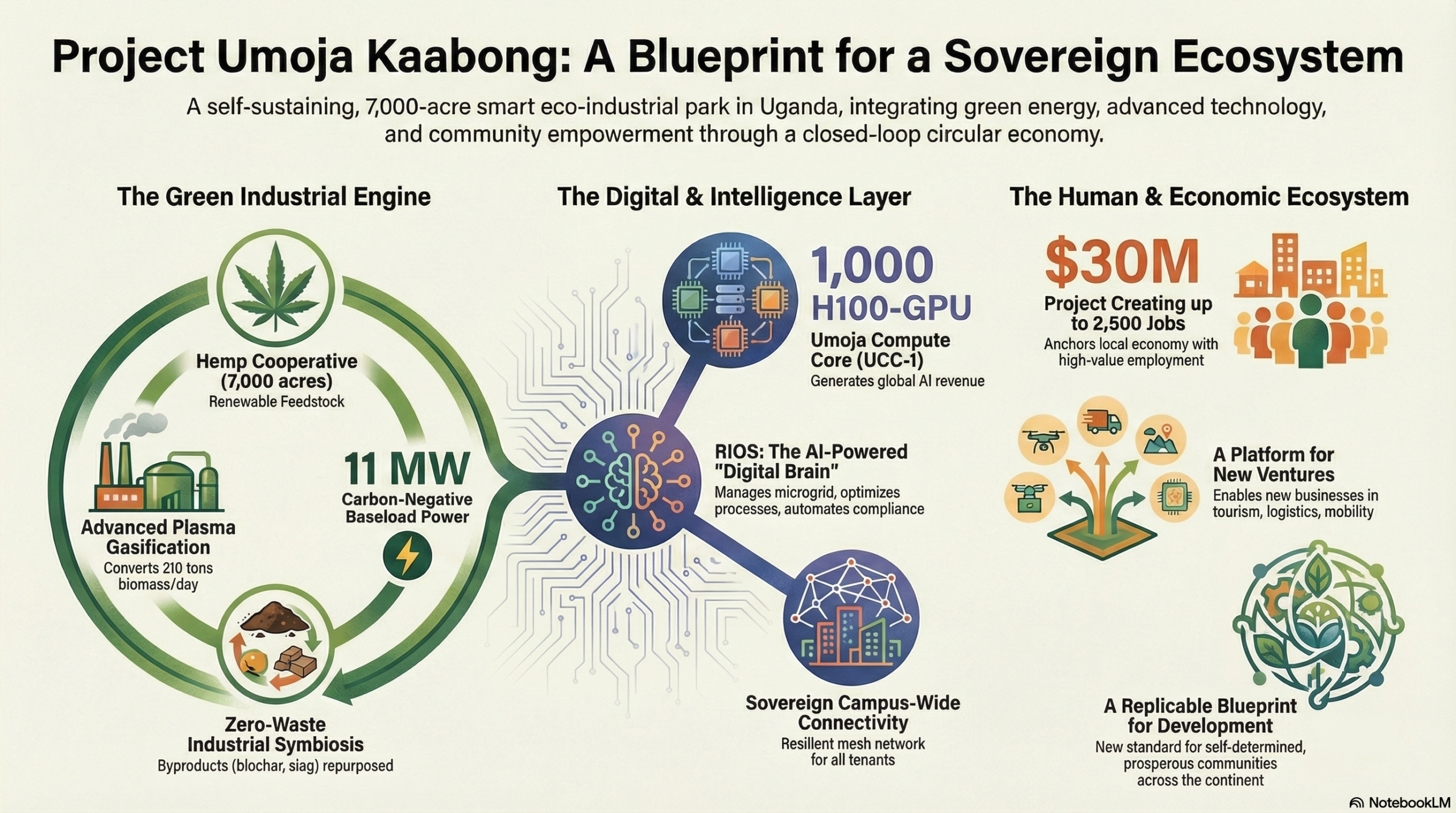
Technical Whitepaper Geophysical Exploration Methods & Digital Infrastructure of Project Umoja Kaabong
——————————————————————————–
1.0 Introduction to Project Umoja Kaabong’s Technical Foundations
Project Umoja Kaabong represents a pioneering initiative to develop a sovereign eco-industrial park, establishing a new paradigm for sustainable development in the Karamoja region of Uganda. The success of this ambitious undertaking rests on two distinct but equally critical technical pillars: advanced subsurface resource exploration to map the region’s geological wealth, and a state-of-the-art sovereign digital infrastructure to power a modern, globally competitive industrial ecosystem. This dual technical foundation is a deliberate strategy to mitigate the two primary risks of any greenfield industrial project: subsurface resource uncertainty and inadequate digital infrastructure.
The purpose of this whitepaper is to provide a detailed technical overview for engineers, project managers, and stakeholders on the specific methodologies and systems being deployed. It aims to clarify the sophisticated capabilities that underpin the project, from non-invasive ground surveys to the high-performance compute clusters that will serve as a primary economic engine.
This document will first detail the comprehensive suite of geophysical methods used to identify and model subsurface resources. Following this, it will provide a component-level breakdown of the project’s digital backbone, outlining the architecture that will deliver resilient connectivity, sovereign cloud services, and world-class computational power to the park and the global market.
2.0 Advanced Geophysical Exploration Methodologies
In modern mining and energy sectors, geophysical exploration is of paramount strategic importance. These non-invasive techniques are crucial for identifying and modeling subsurface geological structures, which de-risks exploration investments, optimizes drilling targets, and guides sustainable resource development. By deploying a comprehensive range of survey methods, Project Umoja Kaabong can build a precise, multi-layered model of the region’s resource potential before significant ground is broken.
2.1 Gravity Survey (Gravimetry)
The core principle of gravimetry involves measuring minute variations in the Earth’s gravitational field. These variations are caused by differences in the density of subsurface rock, allowing geophysicists to infer the underlying geological structure.
Its primary applications include the identification of large-scale geological features such as sedimentary basins, magmatic intrusions, and major faults. It is also highly effective for locating deposits of heavy minerals. For this project, high-precision ground-based surveys are conducted using advanced CG5 and CG6 gravimeters. The typical data outputs are presented as Bouguer anomaly maps, which visually highlight areas of density contrast, and 3D inversions, which model the size and shape of these subsurface bodies.
2.2 Magnetic Survey (Magnetometry)
Magnetometry detects variations in the Earth’s magnetic field that are caused by the presence of magnetic minerals, most notably magnetite. This makes it a highly effective method for mapping deep geological structures and identifying potential targets for metals such as iron and nickel. The method is valued for its speed and ability to cover large areas efficiently.
A diverse range of magnetometry tools is employed to suit different survey conditions:
- Ground Surveys: GSM-19 and Envi Pro magnetometers are used for detailed, on-the-ground data acquisition.
- Large/Inaccessible Areas: For efficient coverage of larger or more challenging terrain, a MagArrow magnetometer is mounted on a DJI M300 drone.
Data outputs are typically rendered as residual magnetic anomaly maps, which highlight variations in the magnetic field linked to geological structures. These are further processed into 3D inversions to model the geometry of magnetic bodies at depth, providing a clearer understanding of potential exploration targets.
2.3 Resistivity and Chargeability (Induced Polarization – IP)
This method evaluates the electrical properties of subsurface materials. It serves a dual function: resistivity measurements identify conductive geological formations, while chargeability is used to detect the presence of disseminated metallic sulfides, such as those associated with copper or zinc deposits.
High-performance IP equipment is utilized to ensure precise characterization of subsurface electrical properties:
- Transmitters: VIP 5000 and VIP 10000
- Receivers: ELREC Pro and Syscal Terra
The results from an IP survey are visualized as pseudo-sections of chargeability and resistivity. These cross-sectional plots provide a detailed profile of the subsurface electrical properties along a survey line, clearly delineating anomalous zones.
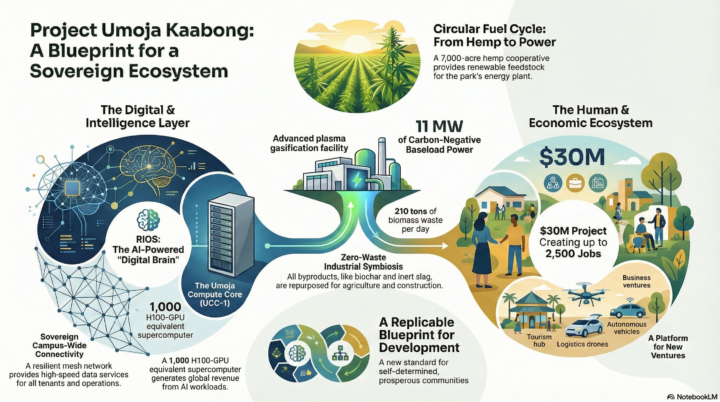
2.4 Electromagnetic Methods (Time-Domain EM – TDEM)
Electromagnetic methods utilize generated electromagnetic fields to detect variations in subsurface conductivity. The Time-Domain EM (TDEM) technique is particularly effective for identifying zones containing conductive minerals like nickel, copper, or polymetallic sulfides.
For TDEM surveys, the project is equipped with high-performance transmitters and receivers from EMIT. The results are presented as profiles, 3D models, or layered sections that provide a clear illustration of conductive and resistive zones at various depths.
2.5 Gamma-Ray Spectroradiometry
This method measures the natural radioactivity emanating from rocks and soils to analyze the concentrations of three key radioelements: potassium (K), uranium (U), and thorium (Th). It is primarily applied to map geological formations and hydrothermal alterations, which are often associated with mineral deposits, particularly rare earth elements (REEs).
The Medusa MS 1000 sensor, mounted on an Alta X drone, is used for these surveys. This drone-based approach offers high precision while facilitating access to difficult terrain and reducing logistical costs. Data outputs include plan maps showing the spatial distribution of each element, ratio maps that help distinguish different rock units, and ternary images that combine all three elements into a single color-coded visualization for a comprehensive overview of radiometric signatures.
2.6 Droneborne VLF GEM System
This system conducts Very Low Frequency (VLF) electromagnetic surveys using a lightweight, drone-mounted GEM sensor. Its purpose is to precisely detect subsurface conductivity variations with high efficiency. This innovative setup is particularly effective for mapping geological structures and identifying fault zones over large or remote areas, significantly reducing the time and logistical constraints of traditional ground-based VLF surveys.
2.7 Borehole Logging and Physical Property Measurement
To achieve a comprehensive geological understanding, the project’s methodology combines two distinct but complementary activities: direct, in-situ downhole measurements using a dedicated borehole logging unit and ex-situ physical property analysis of recovered core samples. This integrated approach provides direct, high-fidelity data that is critical for calibrating and validating the models derived from surface-level surveys.
The primary components of the borehole logging and measurement suite are detailed below:
| Component | Function |
| GV500 Winch | Ensures reliable operation with a 2500-meter cable, depth encoder, and tension gauge. |
| Geovista Digital Logger | Powers probes and manages communication for data recording and control. |
| Probe Suite | Includes Normal Resistivity, Natural Gamma, Temperature-Conductivity, Heat-Pulse Flowmeter, and Fluid Sampler probes for comprehensive downhole analysis. |
| GDD MPP & GDD SCIP | Instruments that automatically measure resistivity, chargeability, electromagnetic conductivity, and magnetic susceptibility of borehole samples for 2D/3D modeling. |
This rigorous, multi-layered approach to characterizing the physical subsurface provides the resource certainty required for industrial development. In parallel, an equally sophisticated digital architecture is deployed to provide the operational certainty—the intelligence, connectivity, and compute power—essential for a modern industrial ecosystem.
3.0 Sovereign Digital Infrastructure Architecture
The strategic deployment of a private, sovereign digital infrastructure is central to the vision of Project Umoja Kaabong. In today’s economy, a modern industrial park cannot thrive without reliable, high-performance connectivity and compute capabilities. This digital backbone is essential for attracting high-value tenants, enabling advanced operational efficiencies, and creating a globally competitive economic zone that is insulated from the vulnerabilities of public infrastructure.
3.1 The Umoja Compute Core 1 (UCC-1)
The Umoja Compute Core 1 (UCC-1) is the primary economic engine of the digital infrastructure. It is a high-density HPC cluster architected to perform two distinct functions: generating global revenue from high-value compute workloads and providing sovereign cloud services to tenants within the industrial park. The UCC-1 is specified as a multi-rack, 1,000 H100-equivalent HPC cluster.
The key components of this system are summarized below:
| Component | Quantity | Key Specifications |
| High-Density GPU Compute Nodes | 250 | 2U servers, each with 4x NVIDIA H100-equivalent GPUs, dual CPUs, 2TB RAM. |
| High-Speed NVMe Storage Nodes | 20 | 2U servers providing a total of 10 Petabytes of raw, high-throughput NVMe storage. |
| 400GbE Leaf-Spine Network Fabric | 1 | Complete set of high-speed switches (e.g., Arista/Mellanox) for a non-blocking internal network. |
| Cluster Management & Control Nodes | 5 | 1U servers for Kubernetes orchestration and Slurm scheduling. |
| Server Rack Enclosures | 20 | Premium, lockable 42U racks (800mm x 1200mm) with integrated PDUs. |
3.2 The RIOS Campus Network
The RIOS Campus Network provides the foundational Layer 2 and Layer 3 connectivity for the entire industrial park. It is architected for N+1 redundancy, providing deterministic, low-latency wireless and wired access to all tenant plots and operational systems.
The core networking hardware is detailed in the following table:
| Component | Quantity | Description & Purpose |
| RIOS Campus SD-WAN Gateway | 1 (pair) | High-performance, redundant Netgate appliances running custom RIOS pfSense firmware to manage all network traffic. |
| RIOS Connect 48XG PoE++ Switches | 10 | 48-port, 10G, high-power managed switches with RIOS firmware. |
| Trifi RIOS Far X Routers | 50 | High-power, outdoor-rated, carrier-grade Wi-Fi 6 mesh routers for campus-wide coverage. |
| Trifi RIOS 7-in-1 Antennas | 50 | High-gain, pole-mount antennas paired with the Far X routers. |
| RIOS Starlink Business Kit | 4 | Redundant, high-performance satellite backhaul kits for primary and backup global connectivity. |
3.3 RIOS Software and Service Layer
The RIOS Orchestration & Cloud Suite is architected to transform the physical hardware into a self-funding infrastructure asset. This dual-revenue architecture is the key to de-risking the entire digital investment. The global revenue generation function is designed to finance the capital-intensive hardware and subsidize the local services, making the digital backbone economically resilient and independent of tenant revenue fluctuations—a critical design feature for a greenfield industrial park.
This intelligent software layer enables two distinct but synergistic service categories:
- Global Revenue Generation: This is the mechanism that ensures the economic self-sufficiency of the digital infrastructure. The UCC-1 connects to global compute markets to perform high-value computational tasks—including Large Language Model (LLM) training, scientific simulations, and participation in Decentralized Physical Infrastructure Networks (DePIN)—generating a stable global revenue stream that covers the asset’s capital and operational costs.
- Local Tenant Services: Subsidized by the global revenue, the RIOS Sovereign Cloud Suite provides a portfolio of secure, low-latency, and competitively priced digital services directly to park tenants. This offering includes Infrastructure-as-a-Service (IaaS), Platform-as-a-Service (PaaS), and Secure Data Vault services, giving businesses access to world-class IT capabilities as a utility.
This comprehensive digital architecture, from the physical hardware layer to the intelligent software and revenue-generating services, provides a powerful and self-sustaining digital foundation for the entire project.
4.0 Conclusion
The technical architecture of Project Umoja Kaabong is fundamentally defined by a strategy of dual sovereignty. By combining an exhaustive geophysical survey campaign with a private, high-performance digital infrastructure, the project systematically eliminates dependence on external geological assumptions and public utility grids. This integrated approach ensures that both physical resource security and digital operational excellence are engineered into the foundation of the park, creating a resilient and competitive industrial ecosystem.
This comprehensive technical approach positions the project for success. By meticulously mapping its geological assets, it ensures resource security and optimizes development. Simultaneously, by deploying a powerful digital backbone, it guarantees operational excellence in the digital age, attracting high-value industry and unlocking new revenue streams. Together, these pillars create a robust and sustainable framework for a truly sovereign eco-industrial park.


